Sunday, 11 August 2019

These posts are a couple of weeks out of date due to poor reception and issues logging into the blog the whole 3 weeks in Abu Dis - so apologies in advance 😊

27th July -  we took the students to Al Quds University here in Abu Dis.
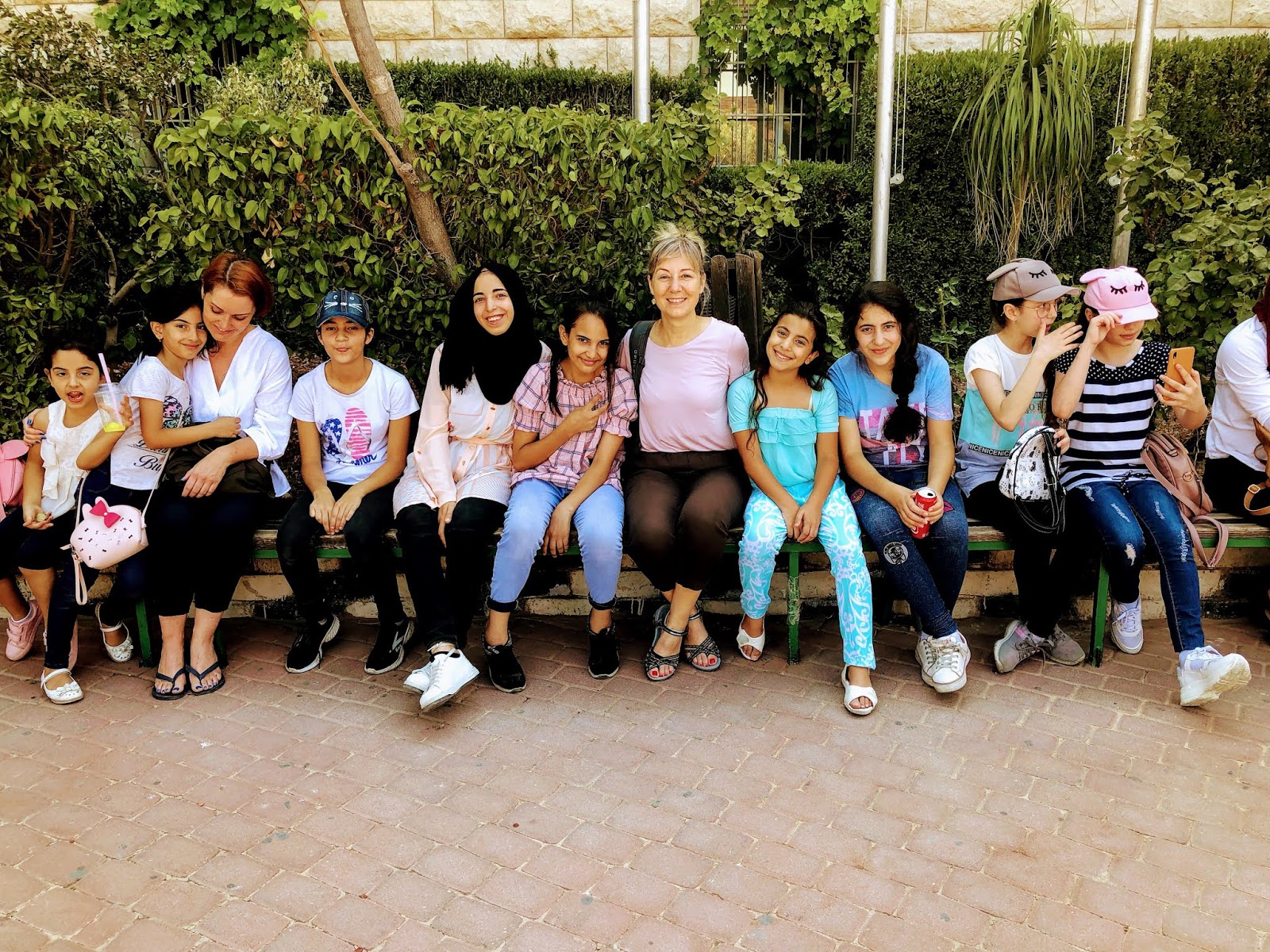
Our students met with students from a summer camp in Jerusalem - just the other side of the separation wall - they all had an opportunity to share their stories - it was sad to hear them take a turn to talk about how they have been affected by the occupation, by the Israeli army or Israeli police. They talked about how they have had to adapt their behaviour when commuting to school, or out visiting with friends or out playing; to be more aware of their surroundings, to not even have hands in pockets for fear of being accused of hiding a weapon, being arrested or worse shot (!), always with an ear open just in case of trouble.

Heartbreaking  - This is not okay. With deep breaths I managed to hold back the tears because their childhoods have been stolen.


Monday, 5 August 2019

Jericho

When it’s 39 degrees in the shade, the only sensible thing to do is to jump in the pool of course!


Bethlehem

Day trip #2 took us to Bethlehem where we went to the Aida refugee camp founded in 1950! We got a tour of the camp and two local organisations and then had some free time at the playground where the boys had a great time playing football.

Later in the day we took our group to the Church of the Nativity which they seemed to be very interested in!
After a walk around the souk it was time to head back to Abu Dis 🌞


Sunday, 28 July 2019

Sunday July 28

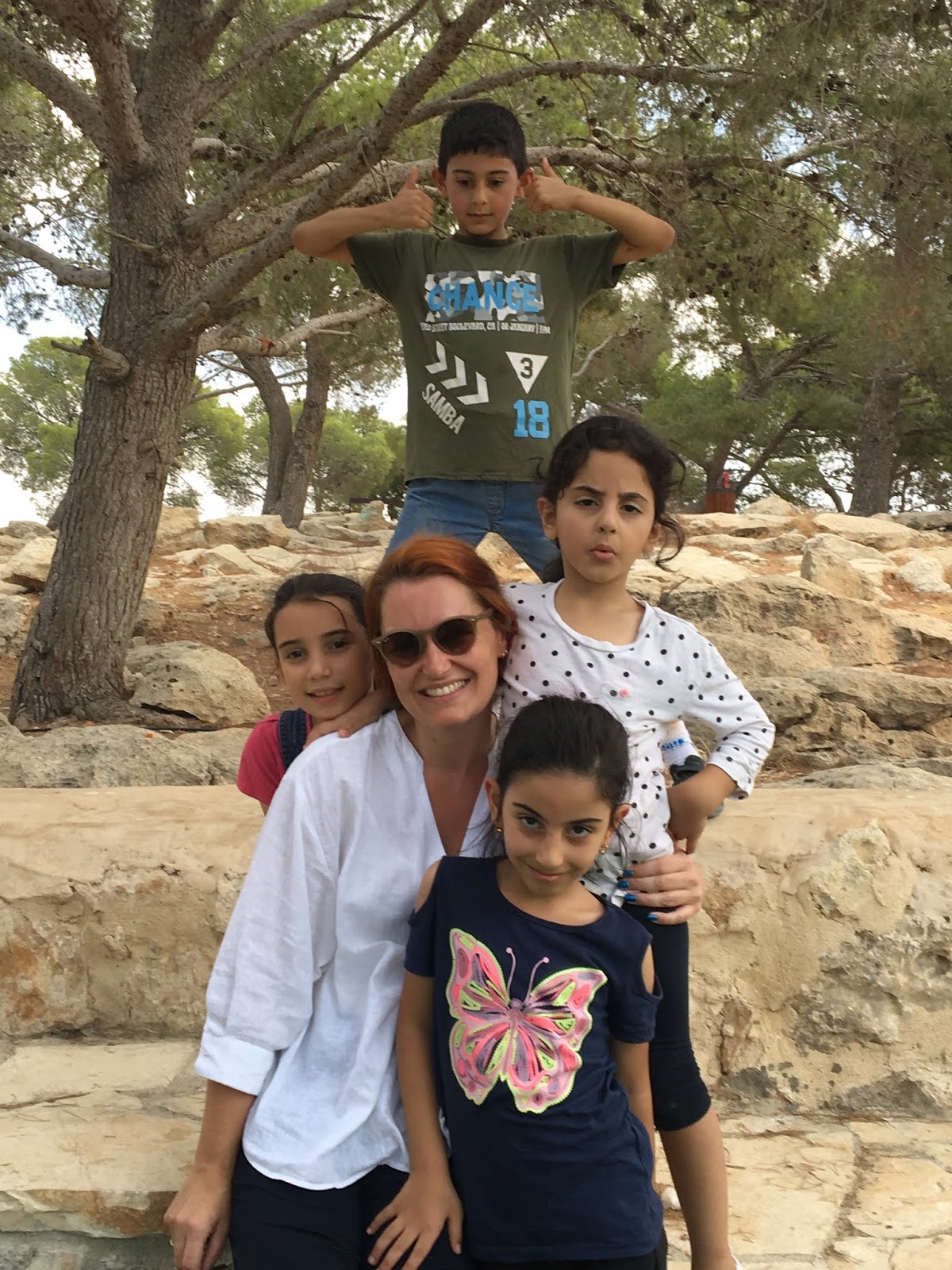
Today we took our kids on their first outing of the camp! We hired a mini bus to take us all to the nearby Bedouin camp Jabal Al Baba, funded by the pope. When we arrived at our destination the first thing that grabbed the kids’ attention was the lovely playground and football field. Two things we have missed in Abu Dis so far. As you can imagine it was hard to pull them away from playing! Hanaa took us on a little tour of the area and she pointed out the tents and shacks the Bedouin community live in nowadays. We also got to see some of the livestock that is the main source of income. In the not too far distance you could see (yet another!!) illegal settlement... this settlement is a huge threat to the people living in Jabal Al Baba as they want to demolish the camp to expand the settlement. Remember that settlements are illegal under international law; however they keep on popping up and expanding all over the West Bank... unfortunately we didn’t get to meet any of the locals so we couldn’t ask if we were allowed to take pictures but here are some of the kids having a great day playing!!


Thursday, 25 July 2019

The first week

On Saturday afternoon I took a service from Ramallah to Abu Dis where Wendy and Abed (the Cadfa coordinator in Palestine) were waiting for me. We made our way to Abed’s house where we met his lovely family and were treated to a delicious meal. After dinner we sat on the rooftop terrace from where Abed pointed out the Al Aqsa mosque and Jordan and talked about the situation in Abu Dis.

On Sunday, our first day at the camp, we started with an introduction to the other volunteers, kids and Dar Assadaqa. Hannah, who will be helping us translate took us on a tour of Abu Dis, showing us the university, the church of Lazarus, the wall and a half torn down buildings. We saw tear gas canisters, where people had tried to knock holes in the wall, graffiti, black areas where fires had been started, watchtowers and the only ‘playground’ in Abu dis.

Monday was our first real day of teaching! The kids are split into three groups, 7-10 and two groups of around 10-13. We came armed with a lot of ideas but not a whole lot of experience so the first day was a big learning curve! We did some yoga, talked about different body parts in English and played a couple of games practicing the days of the week and counting in English. Some of the kids’ English is very good and others are still a bit shy but by the end of the day we got hugs and smiles so it went well.

Knowing a little better what is expected of us we spent the rest of the day coming up with a plan for
 the classes on Tuesday. One of the things we are working on during this camp is getting the kids to talk about their feelings and helping them become more confident talking to other people about themselves and their lives in Abu dis. On Saturday we have a group of kids coming from East Jerusalem and we’d like our kids to put together a presentation with facts and drawings they would like to share with them and also prepare some questions they would like to ask the other kids about life in East Jerusalem, a place they all know and can see from Abu dis but most are not allowed to enter.

In the evening we were invited to join a quiet, peaceful protest with the female relatives and supporters of Huthaifa Badr who has been imprisoned for over 14 months and has been on a hunger strike for 25 days and has now been taken to the prison hospital. Please sign the petition for his release.. He has an infant son who he hasn’t met yet due to his imprisonment….

https://www.change.org/p/andrew-murrison-mp-urgently-free-huthaifa-badr?recruiter=10740762&utm_source=share_petition&utm_campaign=petition_show&utm_medium=whatsapp&recruited_by_id=bddc5f90-3350-0130-a2e9-3c764e049c4f

Tuesday we arrived and first spent some time talking with all of the kids about the things they remembered from yesterday and we asked them to share with us and the group two things they liked and one thing they disliked. Some kids didn’t enjoy yoga but a lot of them said they like everything! Hurrah!

Then we split them into pairs and asked them to make a drawing about themselves and their lives in Abu Dis which they then presented to the group in English. One boy drew a computer and a PlayStation and a smartphone because he loves programming and wants to design video games when he’s older! Another boy drew the wall and soldiers and boys throwing rocks and shooting and blood…. Absolutely heartbreaking.

In the afternoon Wendy and myself took a service to Bethlehem where we visited the Church of the Nativity and the Milk Grotto before making our way down to Banksy’s Walled Off Hotel. The exhibition at the hotel about the occupation is very informative in a fun way and as far as I’m concerned a must see for everyone!! After, we had some tea and cake and made our way back to the bus station walking along the metres high separation wall full of interesting and provocative artwork.

Yesterday was the last day before our two day weekend and we spent time making more drawings to present to the kids from Jerusalem.

We have today and tomorrow off and I’m taking some time to reflect on everything I’ve learned so far as well as relax and get reenergised for a new week of teaching English.

Even though I cherish the peace and quiet I do miss the kids’ loud and sincere ‘Welcome!’,
‘Good morning!’, ‘How are you?’ and ‘I love you!’; they are the best bunch!


Thursday, 18 July 2019

Made it

After a long, delayed, overnight flight; this morning I was treated to some of Israel’s famous hospitality. Some questioning and two baggage checks later I was on my way to Jerusalem by shared taxi to then get on a bus to Ramallah. For some reason the bus couldn’t go past The Qalandiya checkpoint and so I dragged my suitcase through the prison style gates and the dust into Palestine to get on another bus that would take me into town.
On Saturday I start helping out at the ‘New Horizons’ Summer camp in Abu Dis but until then I’m visiting with friends. I’m very much looking forward to meeting the other volunteers and the kids I will be working with over the next few weeks.
I have been waiting for this day for the last 7 months and could not be happier that we are finally there!
I’ve been here before so I have a little bit of an idea about life for the Palestinian people under Israel’s occupation. However I have been told that life in Abu Dis is far different to life in Ramallah. In a way I am looking forward to seeing for myself what goes on there every day so that I can report back to all of you. So that we can stand united in the fight against the horrible injustices that happen here EVERY SINGLE DAY!
For now I am adapting to the heat and catching up with my friends.
More to follow soon!


Sunday, 30 June 2019

A Recollection of 24 Hours


As I descend the steps leading off the plane, waves of humid heat greet me and accompany me to the interior of Tel Aviv’s Ben Gurion airport. My first views of Jerusalem come from inside a shared taxi as it drops off tourist after tourist at their respective hotels. When my stop comes, the taxi which will take me the rest of my journey across the border to the town of Abu Dis awaits me. Abed, the coordinator for Dar as-Siddaqa, explains later that he could not come and greet me himself; like most Palestinians, he doesn’t have the military authorisation from Israel to enter Jerusalem.

I had expected the border between Jerusalem and Abu Dis to be prominent - a checkpoint where Israeli soldiers stood, or a big gate of some sort, slicing the land in two. This was not the case (Abed would later point out that I was leaving Jerusalem, and driving in the opposite direction would be a different story). Instead, my indicators that we were crossing into Palestine were the roads phasing from smooth, unworn concrete to those dusted with a layer of sand, and massive signs in Hebrew and English warning that the road we were on continued into territories dangerous for Israeli civilians. A certain dehumanisation in these signs struck me - the way they warned of this unnamed danger which lay just outside of the city confines. What is it like to grow up near such signs, the connection slowly forming in your mind between Palestine and danger to Israeli civilians like yourself? What lies beyond those roads remains unclear, but you are taught that it seeks to harm you.

We drive on. As we do so, the writing on storefronts goes from Hebrew, to Hebrew and Arabic, to only Arabic, and Jerusalem’s metropolitan sheen quickly fades from the buildings as we enter the West Bank.

25 minutes after setting out we’re in Abu Dis, and Abed is showing me up to the apartment. Our first conversation is him telling me of the event which took place an hour before my arrival: the Israeli military shot a Palestinian of my own age, 21, and left him to bleed out and die. I learn the day after this that the Israeli military is withholding the man’s body from his family. First, they must sign contracts placing restrictions on the number of people who can attend his funeral. Any breaches will result in hefty fines and punishment for his father. Death is not the only tragedy for this family - it is the trigger for a series of events which exacerbate the pain felt by those whose freedoms, or lack thereof, are at the whim of a foreign military even on land internationally recognised as their own.

Abed and I stand on Dar as-Siddaqa’s balcony the next day looking down at Abu Dis’ main road. We’ve just had some coffee brewed in, according to him, the objectively correct manner (note: do not make a latte in Abed’s company). I have spent the morning hearing about Palestine’s history and current situation. I have learned about the three zones which the Israeli military classifies Palestinian cities, suburbs and countryside into in order to designate things such as the agency of the Palestinian authorities in an area, and who is responsible for schools and hospitals. The Israeli military can flexibly change an area’s classification, allowing for increased control of it or decreased responsibility for it as is convenient for the military’s goals.

I also learn of the five different Palestinian ID cards assigned by Israel. Each has unique restrictions on where Palestinians can travel to and live, and whether they can vote. When the Separation Wall was built, around 800 families were cut off from each other due to these IDs – some family members’ IDs only allowed them to reside in the West Bank and not to enter Jerusalem, while other members’ IDs declared them as Palestinians living in Jerusalem, and thereby prevented from living in the West Bank. The borders cut people off from those close to them, along with vital services and community hubs: Abu Dis’ three nearest hospitals and main market all now lie across a largely impassable border for the Palestinians of the West Bank. Even a medical visit to a hospital in Jerusalem requires prior military permission for most West Bank residents, and their permitted length of stay is limited to several days.

Prevented by the border from accessing their old jobs in Jerusalem, many West Bank residents now face unemployment. In certain places such as Abu Dis, unemployment has skyrocketed to levels nearing 40%. Abed laments the stunted economy, and relates it to the importance that Palestinians place on education: “Education is central to the life of Palestinians because we have nothing else to invest in.”

The rest of my day is spent with a biology teacher who teaches in Abu Dis and has lived in the nearby town of al-Eizariya, biblically known as Bethany, her whole life. She takes me on a trip here, where I see Lazarus’ tomb and centuries-old churches. We drink fresh grapefruit juice at a nearby shop where we get in to a conversation with the light-hearted owner about Arabic dialects.

Later, over some tabbouleh and fattoush, she tells me of her love of snakes and taxidermy and we exchange photos. I show her my family and some of the Vermont landscapes near my university, and she shows me photos of food she has made for her students - a pizza representing a cell, and the various toppings its inner contents; a virus cell in the form of a cake; cucumbers and tomatoes carefully cut to reflect the workings of a nerve cell - along with pictures of her siblings and beloved nieces and nephews. A picture of my young cousin makes her light up, and she expresses her love of children to me.

A few minutes later, I ask her how her family has been affected by the occupation. She cites a cousin that the military imprisoned, and then tells me about the many years she had ovarian cancer: Al-Eizariya is right next to the wall, and since it was built in 2003, what used to be a five minute trip to the nearest hospital has become a two and a half hour long affair. Lengthy journey times made treatment for her cancer inaccessible. When her bleeding became incontrollable and hope of treatment deteriorated, she had her uterus removed. With it went the possibility of her having children. Her love of children is poured into her nieces, nephews, and students, but I watch a shadow cross over her face as she mourns the mother she could have been if only for reasonable access to healthcare.

She closes her eyes, shakes her sorrow off with a sigh, and meets my eyes again with a smile.